Both are called gate valves, but they are built for completely different jobs. Here is what actually changes when you pick one over the other.
Walk into any plant and you will hear both called gate valves. Pull the datasheets and the story changes fast. A knife gate valve and a gate valve share a name, a rising stem, and not much else. Choose wrong and you will be back in the valve room in six months, cutting a seized wedge out of a slurry line or replacing a blade that was never rated for your steam service.
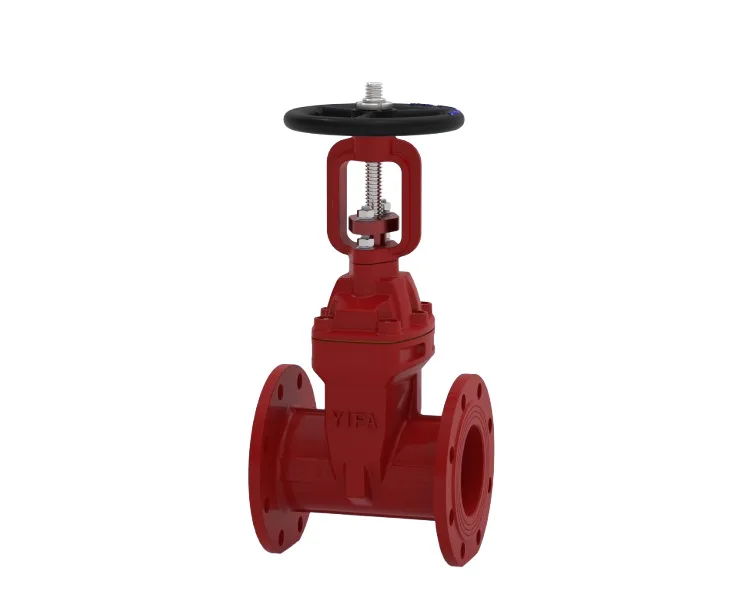
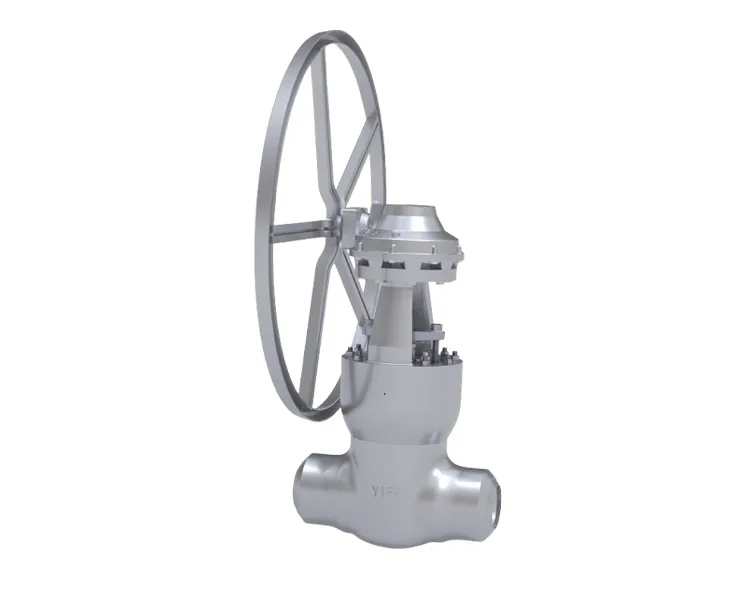
A gate valve isolates clean fluid. Nothing else. The closing element is a wedge or parallel disc that moves perpendicular to the flow, driven by a threaded stem. When fully open, the wedge retracts completely into the bonnet, leaving a full-bore, unobstructed path. That is why gate valves show up on water mains, steam lines, and oil and gas headers where pressure drop has to stay low and the media stays clean.
Gate valves are built for pressure. Steel gate valves follow API 600, and pressure-temperature ratings come from ASME B16.34, with classes from 150 up to 2500. In clean service the metal-to-metal wedge gives a tight shut-off. In dirty service it is the valve's weak point: suspended solids wedge between the disc and the seats, scoring the seating surfaces and holding the gate open.
That last part matters more than it looks. A wedge gate valve on a slurry line does not fail gracefully. It fails with the line still open. Or worse: a gate stuck halfway, and a maintenance crew fighting a 500 kg body.
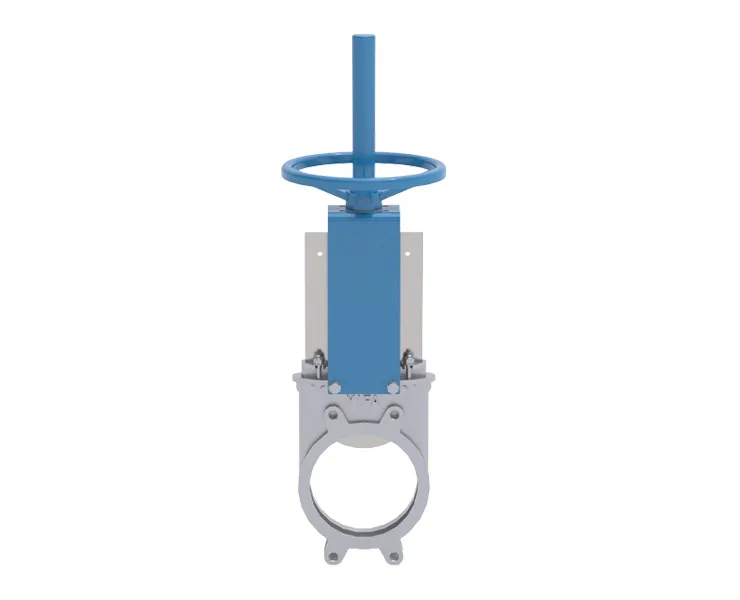
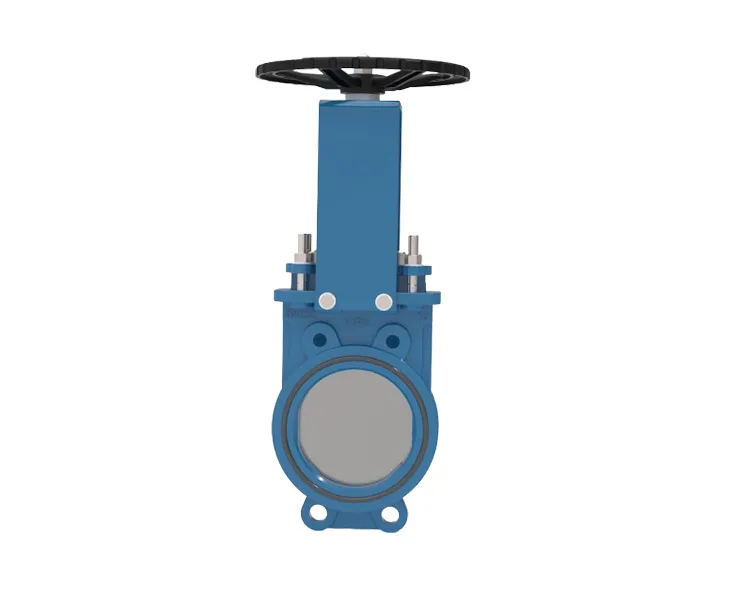
A knife gate valve replaces the wedge with a thin, sharp-edged blade, typically 6 to 12 mm thick. The blade slices through the flow stream and cuts through suspended solids, fibres, and viscous media as it closes. There is no seat pocket where debris can pack. That is the whole point.
The design is usually bonnetless, with the packing gland sealing around the blade rather than around a stem. Bodies are commonly wafer or lug type, which means the valve clamps between existing flanges. Face-to-face length and weight drop dramatically compared with a flanged gate valve of the same size.
Knife gate valves are covered by MSS SP-81, the Manufacturers Standardization Society standard for stainless-steel or stainless-steel-lined bonnetless knife gate valves with flanged ends, sizes NPS 2 (DN 50) through NPS 36 (DN 900). MSS SP-81 covers construction, materials, pressure ratings, and testing. It also sets the design pressure context: these are moderate-pressure valves for applications where shock loadings are not encountered. For higher-pressure knife gate duty, MSS SP-146 extends the ratings up to ASME Class 600.
This is the first question, and it filters out most mistakes. If the line carries solids — slurry, sewage sludge, coal slurry, ore pulp, pulp stock, ash — a knife gate valve is the right tool. The blade shears through the media and the seat stays clean. If the line carries clean fluid under pressure — steam, water, oil, gas — a gate valve is the conventional, standards-backed choice.
There is a hard warning that goes with this. A knife gate valve is not a substitute for a gate valve on a high-pressure steam main, and a gate valve is not a substitute for a knife gate valve on a solids line. They are complementary products, and swapping one for the other is a specification error.
Gate valves win on pressure, full stop. API 600 steel gate valves run from Class 150 to Class 2500, and alloy trims push temperature capability well beyond 500 °C. Knife gate valves are moderate-pressure valves by design. MSS SP-81 knife gates are typically rated around 150 psi (1000 kPa) CWP for sizes up to NPS 24, and 100 psi (700 kPa) above that. Elastomeric seats limit practical temperature to roughly 120 °C; metal-seated designs go higher.
Engineering ToolBox's valve operating temperature tables put swing check and gate families at very low temperature limits with clean service, while the practical ceiling in slurry service is set by the seat elastomer, not the body.
So the rule is simple. Pressure above Class 150 territory or steam service points to a gate valve. Moderate pressure with challenging media points to a knife gate valve.
A knife gate valve in wafer configuration is a fraction of the weight of a flanged gate valve of the same nominal size. On large bores the difference is huge. The compact body also cuts face-to-face length, so the valve fits into existing flange gaps without pipe rework, and the lighter weight reduces structural support requirements and handling cost.
For a slurry header in DN 300 or above, the knife gate valve is often the economical choice even before you count the maintenance saved. For a clean, high-pressure main, the flanged gate valve remains the standard because the pressure rating demands a thicker body wall and a bolted bonnet.
Take a mining tailings line. The media is abrasive, solids-laden, and the pipe is large. This is knife gate valve territory, and our YFPZ73 rising stem wafer knife gate valve is one of the configurations we build for exactly this duty, with GGG40, WCB, SS304 or SS316 bodies and EPDM, NBR, or 13Cr sealing options. For compact spaces, the non rising stem wafer knife gate valve keeps the same blade action with the stem hidden inside the body.
Now take a boiler feedwater or steam system. The media is clean, the pressure is high, and the code path is clear: a resilient or metal-seated gate valve such as the YFZ41X DIN F4/F5 rising stem resilient gate valve, tested to API 598, is the conventional choice. You can compare the full knife gate range on our gate valve category page and see how they fit into mining and slurry handling applications.
Whichever way you go, the datasheet needs the same fields filled: size and pressure class, body material matched to the media, seat material, face-to-face dimension, end connection, and the inspection standard (API 598 is the common test basis for both). If the line has solids, state the solids concentration and particle size; if it has pressure pulses, state that too. The standards are not interchangeable, and neither should your spec be.
Still not sure? Send us your working conditions — media, pressure, temperature, size — and our engineers will point you to the right valve within 24 hours.